Note: I was sent this light for review purposes. All images and opinions are my own.
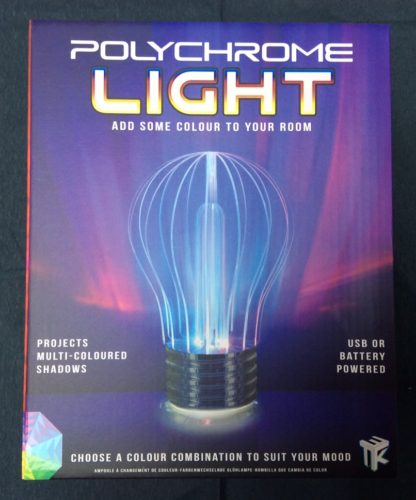
Now that the nights are drawing in I’ve realised that I need better lighting in my office at home. So when Paladone offered to send me a Polychrome light to review, I knew it would be put to good use.
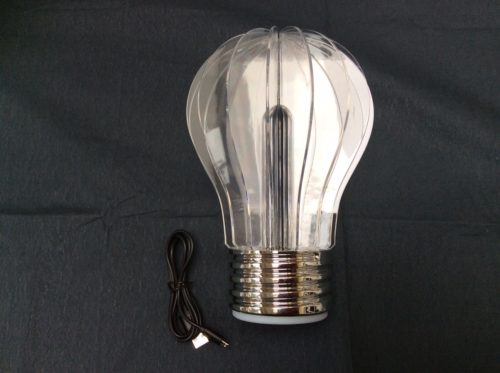
The light is a stylish light bulb shape with different mood settings. The light is powered by micro USB, although you can put batteries in it too. The clever thing is, when you plug it in to the USB it overrides the batteries, so they last a bit longer. It also means that when you unplug the USB you’re not suddenly plunged into darkness.
The light has different mood settings. Press the the light down once and the colour changing light begins to change through a sequence of colours. If you find a colour you’re particularly fond of, you can press it again and it will stay on that colour. Press the light again to turn it off. Simple.
This isn’t the kind of light you can use to read under, but it does create some lovely, calming ambient light. I have it on a side table next to my desk which my son can see from his bed at night, he’s told me that watching the light helps him to fall asleep.
Although it’s not a light for working with, I do enjoy having it in my work room. It does cast some lovely shadows and it has helped to increase the light levels in my office to a level I can work with. Every little helps.
It’s a really innovative light, stylish and a real talking point. It would work just as well in a child’s room as a nightlight, as in a contemporary office space or a teenager’s bedroom for example.
The Polychrome light costs £19.99 and is available directly from the Paladone website and from selected retailers. I have a discount code for the Paladone website which is valid until 31st October 2016. For 20% off enter SHOP20 at the checkout.
When I was pregnant with the small boy, I like most expectant mothers started nesting. It wasn’t enough for me to decorate the nursery, we had everything painted. The bathroom ripped out and replaced and a new boiler fitted. We hadn’t planned to have a new boiler, it’s just that on our annual gas safety inspection the Gas Safe Engineer condemned both it and the gas fire. Oh dear.
Since then I’ve been especially on the ball when it comes to booking our annual gas safety check. Every summer we get our boiler and central heating system checked over and serviced. Summer may seem an odd time to get it done, but I’d rather ensure that everything is safe and sound while we’re not really needing central heating, than wait until winter kicks in before finding that our boiler is kaput.
It’s not just your boiler which needs an annual check and service, but all gas appliances in your home, such as gas fires, ovens and hobs and anything else you may have in the house. Although you may not store your gas BBQ or any camping gas in your home, and they are unlikely to fall within the remit of your annual gas safety check, you should take care to ensure they are stored safely and that they are regularly checked over for damage or wear and tear.
Horrifying stories about carbon monoxide poisoning appear too regularly on the news for my liking. I often think how vulnerable we were when I was pregnant and the boiler was spewing out harmful gases we couldn’t smell, and may never have known about until it was too late.
to ensure the gas safety of your home you should –
Get your boiler and gas appliances checked annually.
Ensure they are checked by a qualified Gas Safe Engineer.
Get a Carbon Monoxide Alarm and fit it, it could save your life.
If the alarm sounds, turn off your gas supply and seek professional advice.
If there is a problem call the Gas Emergency Helpline on 0800 111 999
Having your boiler and gas appliances checked annually by a qualified gas safety engineer is a simple thing you can do to ensure the safety of your family in the place they should feel the safest – your home.
When raw sewage lifted a manhole cover in my Dad’s garden and human waste bubbled out and ran down his path, he guessed there was a major blockage somewhere. He got on the phone to United Utilities and they sent a team down to deal with it.
After some serious and rather disgusting delving, they discovered that one of the pipes was blocked with a nappy on of his neighbours flushed down the toilet (how this is possible I do not know). They also found about six months worth of baby wipes another neighbour had used each night to take her make up off, which she then flushed away.
I’ve always been careful about what we flush down the loo. The usual stuff is ok, but anything like nappies, wipes and sanitary products are always wrapped up and binned – the lesser of two environmental evils. If my home was a hospital those kinds of things would be labelled “biohazard” and sent for incineration, but these days my local council favours landfill.
United Utilities have recently launched a campaign to think before you flush. It’s a campaign I fully support, having surveyed the aftermath of the “poopocalypse” in my Dad’s garden I am keen to do everything I can to stop that happening here. I’ve also walked on far too many beaches which have been strewn with things people have just flushed and forgotten, and no one wants to take a child to a beach covered in used condoms and tampons.
In the UK we spend over £500 million per year on wipes for all sorts of purposes, from cleaning our sinks to caring for children. Wipes are so handy around the home, I think I’ve got at least 5 different kinds of wipes in my house for all different purposes. The problem is they don’t biodegrade and break down like toilet paper would, even if they say they’re biodegradable on the packet they can still clog up the sewers around your home for months or even years whilst they rot down.
Each year United Utilities deals with around 25,000 blockages, a significant number of which are caused by unflushables being flushed! If you take a moment to wrap any unmentionables (I use cheap nappy bags at about 20p for 250) and bin them you can do your bit to help prevent blockages not just on your property, but down your street and beyond. It also means the next time you go for a walk on the beach you might not be reunited with something you flushed and forgot.
The only thing you should flush down your toilet are the three Ps – pee, poo and toilet paper! Think before you flush!
For a whole heap of useful resources including videos, pictures and reports as well as a family friendly downloadable information pack created especially for parents which includes fun activities and posters, visit the United Utilities Website.
In the UK Allergy Awareness Week 2016 is on the 25th April – 1st May. It seems a fitting time of the year to focus on allergies, as the hay fever season has begun and is making life a misery for thousands of sufferers. Although I thankfully don’t suffer with hay fever, I do have a few allergies which I need to be careful of, including a dust allergy which can make me especially miserable. Because I’ve extra cautious about dust, I was looking forward to trying out my Snug Cotton Anti Allergy Duvet from Sleepy People and seeing how I got on with it.
Sleepy People are an online bedding retailer based in the UK. They offer a range of products including anti-allergy items. The duvet I chose, the Anti Allergy Duvet from Snug has an anti allergy treatment which is designed to protect you against dust mites, odour causing bacteria & mould residue.
The duvet comes packaged in a thin fabric bag which I guess you could use to pack it away if you were swapping duvets mid year for a warmer or colder tog.
The Snug Anti Allergy Duvet has a 100% pure cotton cover and is filled with anti allergy polyester hollowfibre. It has a tog of 10.5 which is kind of mid range, neither too warm, or too light and ideal for me all year round I suspect. In the summer I tend to sleep on top of the covers anyway and I don’t like to be too warm, even in winter.
The small boy helped me make the bed. He loved how soft it was and said that it felt like a cloud. My old duvet was about 5 years old and had lost its pillowiness so I take his point. Once we’d made my bed up I loved how it looked, my old skinny duvet now looked mean in comparison, now my bed looked like a comfy hotel bed.
That night I got into bed and snuggled down, I do believe there are few joys in life greater than clean, fresh bedding. Add a brand new duvet or pillow to that and you’re in the best bed in the world.
I’ve used my new Anti Allergy Duvet for a little under a week. I can’t hand on heart swear that it’s made a difference, but previously I was waking up every morning with a bunged up nose and a sore throat, but so far I’ve woken up feeling fine every morning. I’d not considered that I might be waking up feeling awful because of my dust allergy. Plus it’s super-comfy!
The Snug Anti Allergy Duvet from Sleepy People is currently priced at £29.99 and whilst you can pick up a cheap duvet for around half that, I think that given my dust allergy situation and the fact that I’m waking up feeling normal each morning makes that a good investment. Given the amount of time each year I spend hugging my duvet and snuggling under it, it’s probably worth investing in something a little nicer, like this one.
Note: I was sent the Snug Anti Allergy Duvet from Sleepy People for review purposes. All images and opinions are my own.
Now that spring has sprung and the weather is a bit nicer, I’m a bit more inclined to get out in the garden and give it a tidy. Last weekend we spend a happy few hours tidying our garden after the winter, sweeping up leaves and debris, pulling up dead plants, cutting back overgrown climbers, pruning dead branches from shrubs and cutting the grass. We’re planning another tidying up session over the Easter weekend and I’ve bought some new plants to go in the beds to fill some gaps.
Spring is a busy time for me in the garden, I always feel if you put some effort in early then you can sit back later and enjoy your garden. Our flower beds and veg patch are quite easy to look after, bar some weeding and watering. I’m pretty happy with how it’s taking shape after nearly 5 years of creating a family garden from bare earth.
The real problem in our garden is the grass. It’s boggy in parts, with clay underneath, and it’s a haven for moss and weeds. We seem to spend hours tending to it. One of the biggest problems with the lawn is the edging. We’ve built raised beds for some parts of the lawn, but for others the grass just butts up against the flowerbed and it’s a constant battle keeping the edge neat and the grass away from my plants.
Edging seems like the answer to our problems, keeping the lawn and border separate and making it easier to keep the lawn neat and tidy. Fitting it shouldn’t take too long and it should give the garden an instant lift. We just have to figure out how to deal with the moss now, any suggestions for that are very welcome! Moss is the bane of our gardening lives!
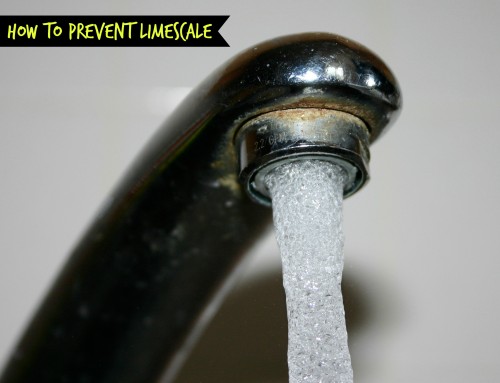
Anyone who lives in a “hard water” area will know that limescale deposits are a problem. Limescale is a chalky, hard substance that builds up due to calcium carbonate deposits in water. Limescale can cause problems such as reduced water flow in taps and pipes, build-up on bathtubs and sinks and blocking the flow of water in shower heads and boilers.
Drinking water with limescale in it is not harmful. Limescale is mainly formed of calcium salt crystals which should have no negative impact on your health. If you accidentally swallow some of the hard limescale it should just naturally pass through your digestive system. If you’re worried about drinking limescale, you could use a water filter to filter your water before you drink it or fill your kettle.
Limescale can leave deposits on your bathroom and toilet, making it look dirty and unsightly. Even if your bathroom is freshly scrubbed, limescale deposits can make it look grubby. When we moved into our house I thought our bathroom loo was filthy, but after hours of scrubbing I showed it to our builder who tipped some limescale remover down it, and within a couple of hours it was like new again.
For tackling bathroom and kitchen limescale there are a number of household products available which are easy to use. These may require a couple of hours to soak off the limescale deposits. Failing that, if your limescale is stubborn, there are companies who can come in and deal with it for a fee.
Likewise with your washing machine and dishwasher, additives can be used to help prevent the build up of limescale deposits. These are fairly inexpensive compared to having to repair or replace your washing machine regularly.
If you’re concerned about chemicals in your home, vinegar or lemon juice is said to be good for dissolving limescale, though you may need to soak the limescale in vinegar for some time. If the limescale is stubborn you may need to soak it for a number of days. I’ve done this with a shower head which took several days, but it did work.
Dealing with limescale deposits in a hard water area is an ongoing and potentially expensive job. You will need to keep on top of it and have regular descaling sessions of your various appliances.
Alternatively, there is a product called Combimate which helps to prevent the build up of limescale in your home. Combimate adds Combiphos to your water and is quickly and easily fitted onto the incoming cold feed pipe to a combi boiler. The Combiphos helps to prevent limescale deposits in the heat exchanger and will reduce limescale formation in the boiler, appliances and in your hot taps and is completely safe to drink and use.
Combimate is easy for any plumber or competent DIY enthusiast to install. It doesn’t require any electrical work or special tools. It can protect boilers and appliances against limescale formation and corrosion, help to keep your energy costs down and can extend the life of your kitchen appliances.
There are several ways to keep on top of your limescale problem, but as with everything, prevention is often better than the cure. Do you have any top tips for dealing with limescale?
Now that the first of the spring bulbs have started to peep through, my thoughts have turned to planning what to do with the garden this year. We’ve worked hard over the last five years on our derelict garden and we’ve built raised beds, laid a lawn, tended neglected trees and planted it up almost from scratch. We’ve had a “let it grow” policy the last few years, waiting for some of the small shrubs we’ve planted to fill out so we could get a better feel for what we wanted, and what we want is more colour and to do more to attract bees and butterflies.
I know from our visits to a lavender farm in Devon that bees and butterflies can’t get enough of the purple stuff, I love it too especially when planted in lavender hedges it looks so effective. It does need a gentle pruning every year though. When it comes to garden design I’m no expert, but I think blocks of colour look great and I don’t like to see bare soil, it seems such a waste.
I’m not very good with planting seeds, so I prefer to buy small plug plants and pot them on into my little greenhouse and then plant them out. Not wanting to let the grass grow under my feet (excuse the pun) I’ve already ordered my plug plants for this year, focussing on what I think will look good and what should attract the bees and butterflies to my little patch. I have plans to order…
Spring flowering…
⇒ Primroses
⇒ Bluebells
⇒ Foxgloves
We already have some of these in the garden, I love sedums for autumn colour and the birds seem to like them too. We’ve always been cautious foxgloves given their poisonous reputation, but the boy is beyond the plant eating stage, we have no pets to worry about and they are very beautiful.
Given the struggles that bees are facing these days, I’m very happy to do what I can to help them survive and thrive and it’s always a pleasure to see butterflies fluttering into the garden and appreciating my planting scheme. What will you be planting this year to make your garden bee friendly?
In 2015 the Met Office decided it would start naming the storms which batter the UK, so far we’ve had Abigail, Barney, Clodagh and the now infamous and devastating Storm Desmond. By giving names to the storms, the Met Office had hoped to raise awareness of more serious weather which was heading to our shores.
The UK has a long history of being battered by storms, perched precariously on the edge of the Atlantic we are just asking for trouble. In my own garden Storm Desmond made his mark, blowing over a heavy wooden arbour so that it smashed my patio furniture. I was less than impressed, but grateful that we’d escaped virtually unscathed compared to people battered and flooded out of their homes in Cumbria, Lancashire and Yorkshire.
Gardens are always the most easily damaged part of your property. I’ve lost count of the number of fence panels we’ve had to replace due to winter storm damage, and if you’ve got a greenhouse, their fragile glass is always first to take a hit. The worst thing about that is the glass gets everywhere, and it’s very rarely safety glass, meaning there are sharp shards of glass all over your garden and buried in the soil ready to cut your fingers when you’re planting out.
The thought of a child or animal getting cut on broken greenhouse glass fills me with horror. I remember my uncle, a keen gardener who had a huge greenhouse, he was forever worrying about the glass breaking and wouldn’t let us near the garden until he’d painstakingly cleared up every shard of glass. Eventually he began to replace the glass with acrylic panels and they never broke again. Sensible.
So what can you do to minimise winter storm damage to your garden?
Tidy up! Put away any garden furniture that can easily be blown about in high winds. Tether down anything (such as my wooden arbour) which could blow over or blow off.
Create natural windbreaks by planting hedging or something similar, these won’t break like solid fence panels.
Replace glass in greenhouses, sheds and other outdoor buildings with plastic greenhouse glazing. These are much stronger and more durable than traditional greenhouse glass and also transmit more light so they are ideal alternatives.
Move plants in pots to a more sheltered and protected spot. This will protect the plant from wind damage and help stop the pot rolling around or getting damaged.
Keep an eye on your trees for signs of damage or instability, if you’re unsure get a professional gardener or tree surgeon to take a look at it for you. It’s better to remove a damaged tree than wait for it to fall on your house in a storm.
It’s only January and I expect we’ll see a few more storms before the winter is out. Hopefully we won’t see anything as bad as Storm Desmond again for a while, but it’s worth taking a bit of time to help protect your house and garden from winter storm damage if you can.
At this time of year there are a million things to do and a million more things to think about. It had been in the back of my mind that I should probably clean my oven before Christmas, but I’d not done anything more about it. It seemed like a chore I could do without. However Oven Pride got in touch and suggested my Christmas dinner might taste a bit better if I did give my oven a good clean, they sent me a box of Oven Pride and it seemed I had run out of excuses not to clean it.
The challenge was to cook a Christmas dinner in my filthy oven, then give it a clean, then cook another Christmas dinner. Thankfully my family like turkey, so we were on!
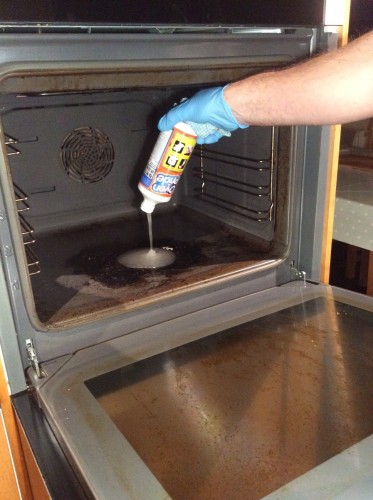
I can’t remember the last time I cleaned my oven, I think it might’ve been sometime over the summer but I can’t be certain. Regardless it was filthy, the glass on the door was caked in brown stuff to the point where I struggled to see through it. The bottom of the oven had a slight dip in it, so anything that splatters or bubbles over pools there and quickly turns black, burnt and acrid.
I popped the turkey into the oven, and because our oven is used to fairly quick blasts of cooking we hadn’t realised how bad it was. After 45 minutes of the oven being on, the kitchen quickly filled with smoke and I had to keep the back door open. My eyes started stinging every time I went into the kitchen and regrettably I’d left a damp coat over a chair, so that stank of smoke and grease and had to be washed the next day. The kitchen reeked and it was very hard to spend any time at all in there whilst the oven was on. I hardly dared to imagine how the food would taste.
I’d cooked the turkey, stuffing, roast potatoes and roast parsnips in the oven. I’m veggie so I don’t know how the turkey tasted, but the roast potatoes and parsnips did have a slight smoky taste, and if I’m honest the whiff of the oven was still hanging in the air while we were eating, so I was very put off by it. I could only imagine what my guests on Christmas Day would think sat in an acrid, smoke-filled kitchen tucking into turkey and all the trimmings – not impressive. Action needed to be taken.
I was so disgusted I could hardly wait for the oven to cool down enough for me to get cracking with the cleaning. In the box comes a pair of gloves to protect your hands, a large bag to soak your oven shelves in and of course a big bottle of Oven Pride. Read the instructions carefully before you start, but it is very simple to do. I would recommend leaving it overnight rather than the 4 hour minimum. We left it for four hours but our oven was so filthy it needed a longer soaking, so we did the oven again, the second time overnight.
The shelves in the bag were amazing – a revelation. You could see the grime coming off them almost instantly and once they’d been left overnight and rinsed clean they shone like I’d never seen before. I was very impressed.
As you can see the oven is spotless, you could eat your dinner off it and those shelves are zingy clean and shiny! It was time to put it to the test, it was time to cook turkey number two!
I cooked the exact same Christmas dinner as before, only this time it was in a clean and shiny oven. This time there was no smoke, the kitchen was a nice place to be, all was as it should be.
The dinner was how it should be, the boys enjoyed the turkey, the roast potatoes and parsnips were really good (even if I do say so myself) and not at all acrid or smoky. Christmas dinner was a success!
I’m ashamed that I let my oven get in such a state. I promise to try and keep my oven clean from now on, knowing what a difference it makes to the taste of the food. Using Oven Pride is really simple, there’s very little elbow grease involved, and if you leave it overnight even the most stubborn oven grime is easily removed. I guess if you keep on top of it, cleaning your oven maybe twice a year then the filth doesn’t build up. Take it from one who knows, don’t let your oven get smoky and disgusting like mine.
Note: We are sent the Oven Pride to try for review purposes and we were compensated for cooking the meals, but all images and opinions are our own.
Working from home has many benefits and I know I’m very lucky. I’m generally disciplined enough to go to my home office every morning at 9am, and work virtually uninterrupted until the boys tumble in from school and work wanting their tea. One of the downsides of working from home is that my office is horribly cluttered. After getting sick of working from the sofa, a few months ago I set up a makeshift office space in the “man-room”. This has been great, but the room is still half filled with man stuff and my workspace is a chaotic mess.
I’ve been mulling over various solutions for a while now, but what was clear was that I needed more shelves which would accommodate books, files, boxes and various other bits. Motivating myself to put stuff in files and on the shelves would be a different matter entirely.
It was suggested I have a look at Shelfstore, they make made-to-measure shelving units for use around the home and in the office, so perfect for my home office then! The place I wanted to put the shelves was in an unusual spot, below a sloping ceiling, so I needed a shelving solution to fit my non-standard space. I also needed a few shelves I could access without having to bend.
The online design wizard – surprisingly simple!
Once I’d measured up, I just put the measurements into the Shelfstore online design wizard, selected how many shelves I needed and what my requirements were, and a design was suggested. It looked like a simple and robust design, and seemed ideal for what I needed it for. Tempted by the thought of a tidy and organised office space, I put my order in. A few days later my flat-pack shelving units arrived and just needed assembling.
The shelves arrived in several well-packed boxes, yes they were heavy but you’d expect that from proper wooden shelving. On a rainy Sunday my husband took them upstairs and began to put them together. They were supplied with a set of simple instructions and seemed fairly self explanatory. It didn’t take him that long to do, maybe 90 minutes for a pretty big shelving unit and there wasn’t that much swearing involved either!
When he’d finished he called me upstairs to show off his hard work. I have to say that I was really impressed. The shelves fit the space really well, they were the right height for my needs and seemed to be really strong (their website says each shelf can hold up to 100kg, which is just as well given how much clutter I have). I really like the pale pine colour of the shelves which brightens up the dark room too.
Made-to-measure shelves designed with the Shelfstore online design wizard, quick delivery, sturdy, attractive shelves built by a handsome man (not supplied). I’m a very happy bunny. Now I just need a PA to do my filing for me….